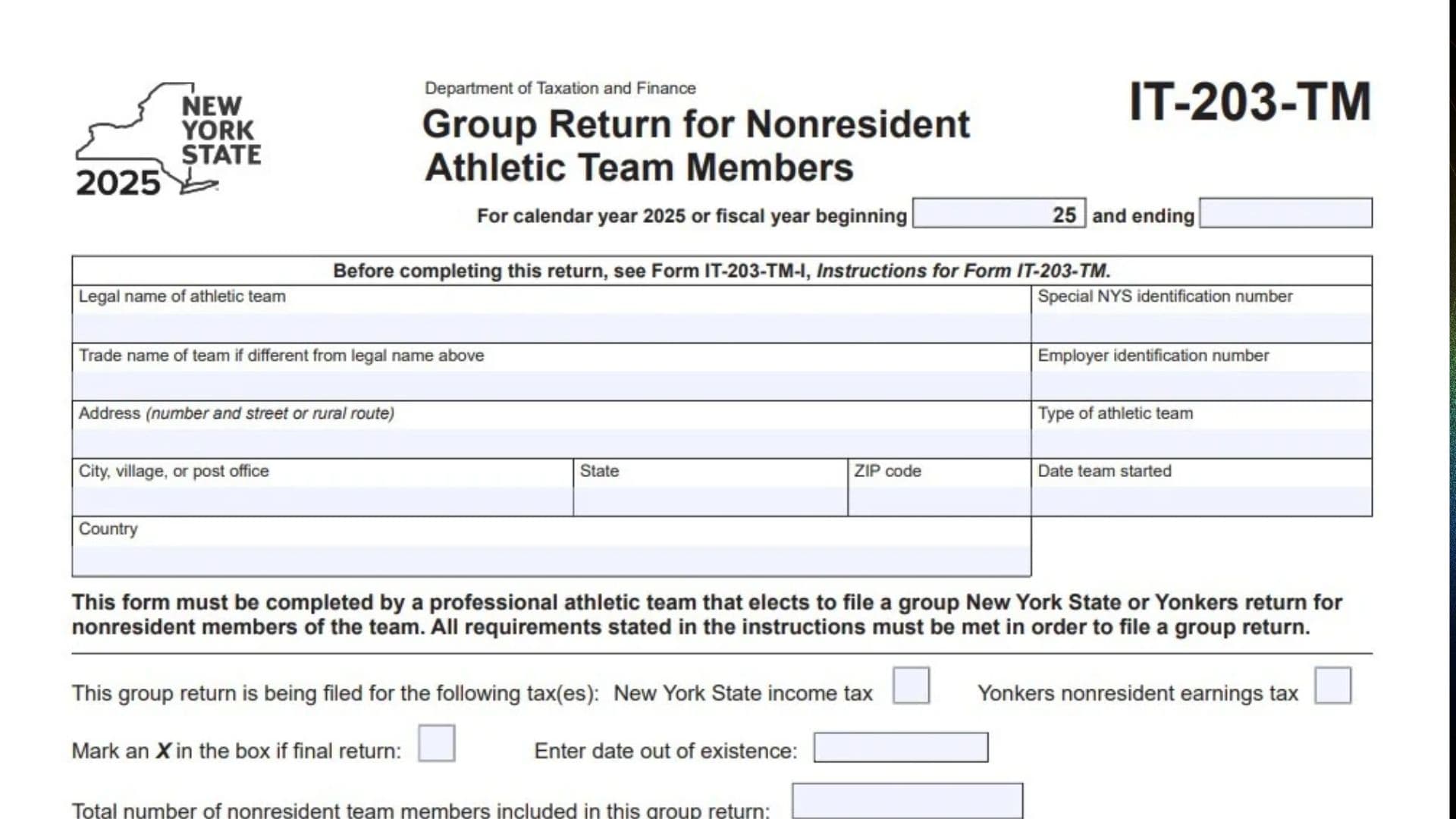
New York Form IT-255, Claim for Solar Energy System Equipment Credit, is a tax form used by eligible taxpayers to calculate and claim a credit for qualifying solar energy system equipment expenditures. The form is administered by the New York State Department of Taxation and Finance under Section 606(g-1) of the New York Tax Law. Its purpose is to allow taxpayers to apply an eligible portion of their solar energy system equipment costs against their New York State income tax liability.
Form IT-255 collects information about qualifying solar equipment purchases, power purchase agreements, and lease arrangements. It records when the equipment was placed into service, the amount of qualifying expenditures or lease payments, the calculated credit, and any applicable limitations. It also accounts for credits carried forward from a previous tax year and determines how much credit can be used in the current year.
The form is divided into two main sections. Schedule A calculates the solar energy system equipment credit using information about the taxpayer’s equipment purchase or financing arrangement. Schedule B determines how much of the available credit can be applied against the current year’s tax liability and how much remains available for future years.
Taxpayers who have qualifying solar energy system equipment arrangements may use this form to claim the applicable credit. The form includes separate reporting areas for direct purchases, power purchase agreements, and leases, allowing taxpayers to report the arrangement that applies to their situation.
Completing Form IT-255 correctly is important because the amount of the credit depends on qualifying costs, applicable percentage calculations, limitations, previous-year carryovers, and the taxpayer’s tax liability. Errors in these calculations may result in an incorrect credit claim or carryover amount. Taxpayers should review the applicable instructions and ensure that the information entered on the form agrees with their supporting records and New York income tax return.
Who Can Claim the Solar Energy System Equipment Credit?
The credit is intended for eligible New York State taxpayers who have qualifying solar energy system equipment expenditures. The applicable arrangement may involve:
- Purchasing solar energy system equipment.
- Entering into a qualifying power purchase agreement.
- Leasing solar energy system equipment.
The solar equipment must meet the applicable requirements for the credit. The taxpayer should verify eligibility before claiming the credit, particularly when the equipment is financed, leased, or shared with other residents.
The credit is calculated at 25% of qualified expenditures, subject to a maximum of $5,000. It is nonrefundable, meaning an unused amount cannot be received as a tax refund. Eligible unused credit may instead be carried forward for up to five years.
How To File Form IT-255
Form IT-255 must be submitted with the taxpayer’s New York State income tax return. It is not intended to be filed as a standalone tax return.
You must attach Form IT-255 to one of the following returns:
- Form IT-201: New York State Resident Income Tax Return.
- Form IT-203: New York State Nonresident and Part-Year Resident Income Tax Return.
Complete Form IT-255 after gathering the information needed to calculate your solar energy system equipment credit.
Information To Prepare Before Completing Form IT-255
Before starting, collect the following information where applicable:
- Your name and Social Security number as reported on your income tax return.
- The date the solar energy equipment was placed into service.
- Purchase invoices and receipts showing qualifying equipment expenditures.
- Records of eligible installation, labor, engineering, and related costs.
- Written power purchase agreements or solar equipment lease agreements.
- Records of payments made during the current tax year.
- Previous-year Form IT-255 showing any available credit carryover.
- Your New York State income tax information.
- Details of other tax credits applied before the solar energy system equipment credit.
- Records showing each taxpayer’s contribution if multiple taxpayers share the solar equipment costs.
Only enter amounts that qualify under the applicable tax instructions. Keep supporting documents with your tax records in case the Department of Taxation and Finance requests verification.

How To Complete Form IT-255
Form IT-255 contains two schedules. Schedule A calculates the available solar energy system equipment credit, while Schedule B determines how much of that credit can be applied against the current year’s tax liability and how much can be carried forward.
Taxpayer Information
The top section identifies the taxpayer claiming the credit.
Names as shown on return
Enter your name exactly as it appears on your accompanying New York State income tax return. If you are filing jointly, use the names shown on the joint return.
Your Social Security number
Enter your Social Security number in the space provided. Make sure it matches the number reported on your Form IT-201 or Form IT-203.
Schedule A: Calculation of Solar Energy System Equipment Credit
Schedule A calculates the credit associated with your solar energy system equipment. It provides three separate reporting charts:
- Purchase
- Power purchase agreement
- Lease
Complete the chart that applies to your solar energy arrangement. If more than one arrangement applies, report the relevant information in the appropriate sections.
Purchase
Use this section when you purchased qualifying solar energy system equipment for your principal residence.
Column A: Date Equipment Was Placed in Service
Enter the date the solar energy system equipment was placed into service. Use the eight-digit MMDDYYYY format.
For example, if the equipment was placed into service on June 15, 2025, enter 06152025.
Use the actual date the equipment became operational and was placed in service, rather than automatically using the purchase invoice date.
Column B: Qualified Expenditures
Enter the total qualifying expenditures associated with purchasing the solar energy system equipment.
Qualified expenditures may include:
- The cost of solar equipment and materials.
- Labor costs associated with on-site preparation.
- Assembly and original installation expenses.
- Architectural and engineering services.
- Designs and plans directly related to constructing or installing the solar energy system.
Do not include expenses paid using nontaxable federal, state, or local grants. Also exclude interest and other financing charges.
Use supporting invoices and payment records to determine the qualifying amount.
Column C: 25% of Qualified Expenditures, Not to Exceed $5,000
Calculate 25% of the amount entered in Column B.
Use this formula:
Qualified Expenditures × 0.25 = Column C
The result cannot exceed $5,000.
For example, if your qualifying solar equipment expenditures are $12,000, multiply $12,000 by 0.25 to calculate a credit of $3,000.
If your qualifying expenditures are $30,000, the calculation produces $7,500. However, because the maximum is $5,000, the amount entered in Column C cannot exceed $5,000.
Power Purchase Agreement
Use this section if you entered into a qualifying agreement to purchase electricity generated by solar equipment that you do not own.
Column A: Date Equipment Was Placed in Service
Enter the date the solar energy system equipment was placed into service.
Use the MMDDYYYY format. Make sure the date matches the equipment’s actual installation and service records.
Column B: Qualified Expenditures
Enter the qualifying payments made during the current tax year under the written power purchase agreement.
The agreement must cover at least 10 years and relate to the purchase of electricity generated by solar energy equipment that you do not own.
The equipment must be installed, placed in service, and used at your principal residence in New York State.
Do not include payments made using nontaxable federal, state, or local grants.
Column C: 25% of Qualified Expenditures, Not to Exceed $5,000
Multiply the amount entered in Column B by 25%.
Use this calculation:
Column B × 0.25 = Column C
The amount calculated cannot exceed $5,000. This column represents the preliminary credit calculation before applying the separate limitation in Column D.
Column D: Limitation
Enter the remaining allowable limitation for the power purchase agreement.
Calculate this amount by subtracting the total amount associated with the same agreement reported on line 1 of all previous years’ Forms IT-255 from $5,000.
Use the following calculation:
$5,000 − Previous-Year Amounts Reported for This Agreement = Column D
This calculation prevents the taxpayer from exceeding the applicable maximum credit for the same power purchase agreement over multiple tax years.
Lease
Use this section when you lease qualifying solar energy system equipment that you do not own.
The lease arrangement must meet the applicable requirements, including a written agreement spanning at least 10 years.
Column A: Date Equipment Was Placed in Service
Enter the date the leased solar energy system equipment was placed into service.
Use the MMDDYYYY format. Refer to your installation or equipment activation records to identify the correct date.
Column B: Qualified Lease Payments
Enter the total amount of lease payments to be made under the qualifying written agreement.
The agreement must cover at least 10 years, and the equipment must be installed, placed in service, and used at your principal residence in New York State.
Do not include payments made using nontaxable federal, state, or local grants.
If you are a tenant-shareholder in a cooperative housing corporation or own a condominium, enter your share of the qualifying expenditures or payments made by the cooperative housing corporation or condominium management association. The organization should provide the information needed to determine your share.
Column C: 25% of Qualified Lease Payments, Not to Exceed $5,000
Multiply the amount entered in Column B by 25%.
Use this formula:
Column B × 0.25 = Column C
The calculated amount cannot exceed $5,000.
This figure is used in determining the applicable lease limitation.
Column D: Amount From Column B Paid in the Current Tax Year
Enter the portion of the amount reported in Column B that was actually paid during the current tax year.
Use your payment records to determine the correct amount.
Do not automatically enter the entire lease amount from Column B. This column specifically asks for the amount paid during the current tax year.
Column E: Limitation
Calculate the remaining limitation for the lease arrangement.
Subtract the total amount associated with the same lease reported on line 1 of all previous years’ Forms IT-255 from the amount in Column C.
Use this formula:
Column C − Previous-Year Amounts Reported for This Lease = Column E
This calculation helps ensure that the total credit claimed for the lease does not exceed the applicable maximum.
Important Note About Power Purchase Agreements and Leases
For qualifying power purchase agreements and leases that extend beyond 15 years, no credit is allowed after the 15th year of the agreement. Taxpayers should consider the agreement’s duration when determining whether payments qualify for the credit.
Current-Year Credit Calculation
After completing the applicable Purchase, Power Purchase Agreement, or Lease chart, use the following lines to calculate the total solar energy system equipment credit.
Line 1: Current-Year Credit
Enter the credit calculated for the current tax year.
The amount depends on the type of solar energy arrangement:
- Purchase: Enter the amount from Column C.
- Power purchase agreement: Enter the smaller amount from Column C or Column D.
- Lease: Enter the smaller amount from Column D or Column E.
If multiple taxpayers occupy the same principal residence and contribute toward the eligible expenditures, the credit must generally be divided according to each taxpayer’s contribution.
However, married couples filing a joint return do not need to divide the credit between themselves.
Enter the total allowable current-year credit on this line.
Line 2: Carryover Credit From Last Year’s Form IT-255
Enter the unused solar energy system equipment credit carried forward from the previous tax year.
Find your previous year’s Form IT-255 and locate line 10. Transfer that amount to line 2 of the current year’s form.
If you have no eligible credit carried forward from the previous year, enter zero.
Line 3: Solar Energy System Equipment Credit
Add the amounts reported on lines 1 and 2.
Use this calculation:
Line 1 + Line 2 = Line 3
Enter the result on line 3.
This amount represents the total solar energy system equipment credit available before applying the current-year tax limitation.
Schedule B: Application of Credit and Calculation of Carryover
Schedule B determines how much of the available solar energy system equipment credit can be used against your current-year New York State tax liability.
It also calculates the remaining credit that may be carried forward to future tax years.
Line 4: Tax Due Before Credits
Enter your New York State tax amount before applying tax credits.
The amount depends on which income tax return you are filing:
- Form IT-201 filers: Enter the amount from Form IT-201, line 39, plus any amount from Form IT-201-ATT, line 21.
- Form IT-203 filers: Enter the amount from Form IT-203, line 46, plus any amount from Form IT-203-ATT, line 20.
Use the applicable amounts from your completed New York State income tax return and accompanying schedule.
Line 5: Other Credits Applied Before This Credit
Enter the total amount of other tax credits that must be applied before the solar energy system equipment credit.
If you are claiming multiple New York State tax credits, you must follow the applicable credit ordering rules.
The general credit application order is:
- Household credit.
- Credits that cannot be carried forward or refunded.
- Credits that can be carried forward for a limited period.
- Credits that can be carried forward for an unlimited period.
- Refundable credits.
Include the credits that apply to your tax return and must be used before this solar energy credit.
If no other credits need to be applied before this credit, enter zero.
Line 6: Tax Remaining After Other Credits
Subtract the amount on line 5 from the amount on line 4.
Use this formula:
Line 4 − Line 5 = Line 6
Enter the result on line 6.
This amount represents the remaining tax liability available to be offset by the solar energy system equipment credit.
Line 7: Credit Applied Against Current-Year Tax
Compare the amount on line 3 with the amount on line 6.
Enter whichever amount is smaller.
Use this calculation:
The Smaller of Line 3 or Line 6 = Line 7
For example, assume your available solar energy system equipment credit on line 3 is $4,000 and your remaining tax liability on line 6 is $2,500.
You can apply only $2,500 of the credit against your current-year tax liability. Therefore, enter $2,500 on line 7.
Transfer the amount from line 7 to the appropriate additional tax credit schedule:
- Form IT-201-ATT, line 5, for Form IT-201 filers.
- Form IT-203-ATT, line 6, for Form IT-203 filers.
Special Rule for Multiple Taxpayers Sharing a Principal Residence
If you shared your principal residence with another taxpayer or taxpayers who are also claiming the solar energy system equipment credit, use only your share of the amount on line 3 when calculating line 7.
You must also submit a separate statement identifying:
- The name of each taxpayer who occupied the residence and is claiming the credit.
- The total solar energy system equipment expenditures contributed by each taxpayer.
For example, if you and your parent shared the cost of installing solar equipment and each contributed 50%, each taxpayer must claim their respective 50% share of the total credit. Both taxpayers must complete their own Form IT-255 and submit the required supporting statement.
Married couples filing a joint return are not required to divide the credit between themselves.
Line 8: Remaining Credit After Current-Year Application
Subtract the amount on line 7 from the amount on line 3, or from your applicable share of line 3 if multiple taxpayers are claiming the credit.
Use this formula:
Line 3 − Line 7 = Line 8
For example, if line 3 shows an available credit of $4,000 and line 7 shows that $2,500 was applied against your current-year tax, the remaining credit is $1,500.
Enter $1,500 on line 8.
This amount represents the unused credit before accounting for any portion that expires during the current tax year.
Line 9: Credit Amount That Expired During the Current Tax Year
Enter any portion of the unused credit included on line 8 that expired during the current tax year.
The solar energy system equipment credit can be carried forward for a maximum of five years.
Any unused amount that reaches the end of its permitted carryforward period expires and can no longer be claimed.
Review your previous-year Forms IT-255 and carryforward records to identify any credit that has reached its expiration date.
If no credit expired during the current tax year, enter zero.
Line 10: Amount of Credit Available for Carryover to Next Year
Calculate the remaining credit available for future tax years by subtracting line 9 from line 8.
Use this formula:
Line 8 − Line 9 = Line 10
For example, if line 8 shows an unused credit of $1,500 and line 9 shows that $300 expired during the current tax year, the remaining carryover credit is $1,200.
Enter $1,200 on line 10.
This amount represents the eligible unused credit that may be carried forward to the following tax year, subject to the five-year carryforward limit.
Keep a copy of the completed form because the amount on line 10 will be needed when completing the next year’s Form IT-255, line 2.
Important Rules and Limitations When Claiming Form IT-255
Before submitting the form, understand the following restrictions:
Maximum Credit Amount
The solar energy system equipment credit equals 25% of qualified expenditures, subject to a maximum credit of $5,000.
The applicable limitations must be considered when calculating the credit for purchases, power purchase agreements, and leases.
Nonrefundable Credit
The credit is nonrefundable. This means you cannot receive the unused portion as a tax refund.
If the available credit exceeds your current-year tax liability, the eligible unused amount may be carried forward.
Five-Year Carryforward Period
Unused credit may be carried forward for up to five years.
Any amount that remains unused after the permitted carryforward period expires and cannot be claimed in a later tax year.
Principal Residence Requirement
The solar energy system equipment must meet the applicable principal residence requirements in New York State.
A vacation home or summer home does not qualify as a principal residence for this credit.
Multiple Taxpayers Claiming the Same Solar Equipment
When multiple taxpayers share a principal residence and contribute toward the solar equipment costs, each taxpayer generally claims a portion of the credit based on their contribution.
The required statement identifying each taxpayer and their contribution must also be submitted.
Final Review Before Filing
Before submitting Form IT-255 with your New York State income tax return, review the following checklist to make sure the information is complete and accurate.
Taxpayer Information
- Your name matches the accompanying income tax return.
- Your Social Security number is entered correctly.
- You are submitting the form with Form IT-201 or Form IT-203.
Schedule A: Credit Calculation
- You completed the correct Purchase, Power Purchase Agreement, or Lease section.
- The equipment placement-in-service date is entered in the MMDDYYYY format.
- Qualified expenditures or lease payments are calculated correctly.
- The 25% calculation is correct.
- The applicable $5,000 limitation has been considered.
- Nontaxable grant payments and financing charges have been excluded where required.
- Previous-year agreement amounts have been considered when calculating the applicable limitations.
- Line 1 reflects the correct current-year credit.
- Line 2 matches the previous year’s Form IT-255, line 10.
- Line 3 correctly adds lines 1 and 2.
Schedule B: Credit Application and Carryover
- Line 4 matches the applicable tax amount from Form IT-201 or Form IT-203.
- Line 5 includes other credits applied before this credit.
- Line 6 correctly subtracts line 5 from line 4.
- Line 7 contains the smaller applicable amount from line 3 or line 6.
- The amount on line 7 has been transferred to the appropriate additional tax credit schedule.
- Line 8 correctly calculates the remaining unused credit.
- Line 9 includes any credit that expired during the current tax year.
- Line 10 correctly calculates the available carryover credit.
Supporting Documents and Final Submission
- Purchase invoices, receipts, and installation records are available.
- Power purchase or lease agreements are available, if applicable.
- Current-year payment records are available.
- Previous-year credit carryover information has been reviewed.
- Any required statement for multiple taxpayers claiming the credit is included.
- All calculations have been checked for accuracy.
- Form IT-255 is included with the correct New York State income tax return.
Completing these checks helps reduce calculation errors and ensures that the solar energy system equipment credit is properly reported. Keep your supporting documents and a copy of the completed Form IT-255 with your tax records for future reference, especially if you expect to carry unused credit into another tax year.